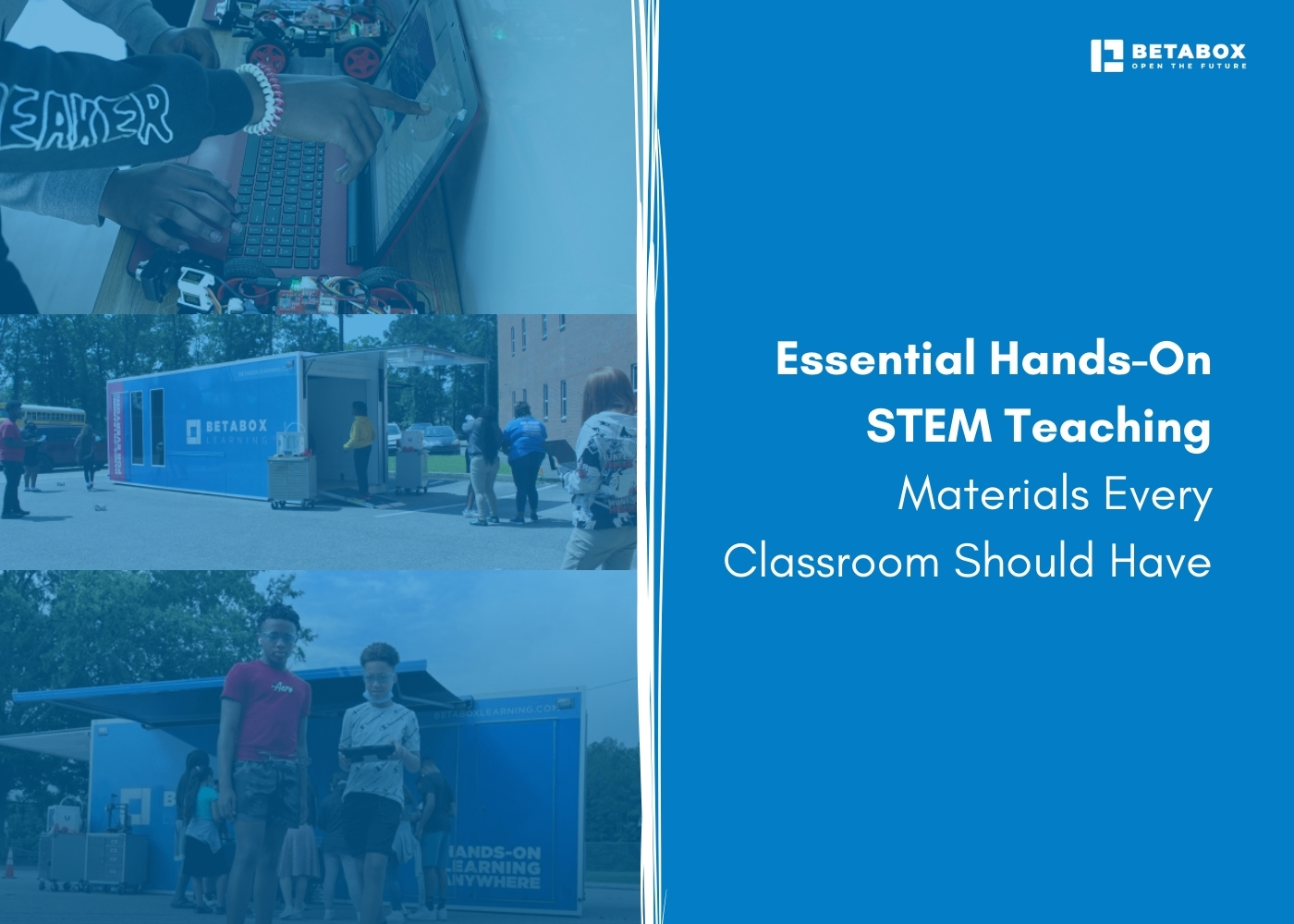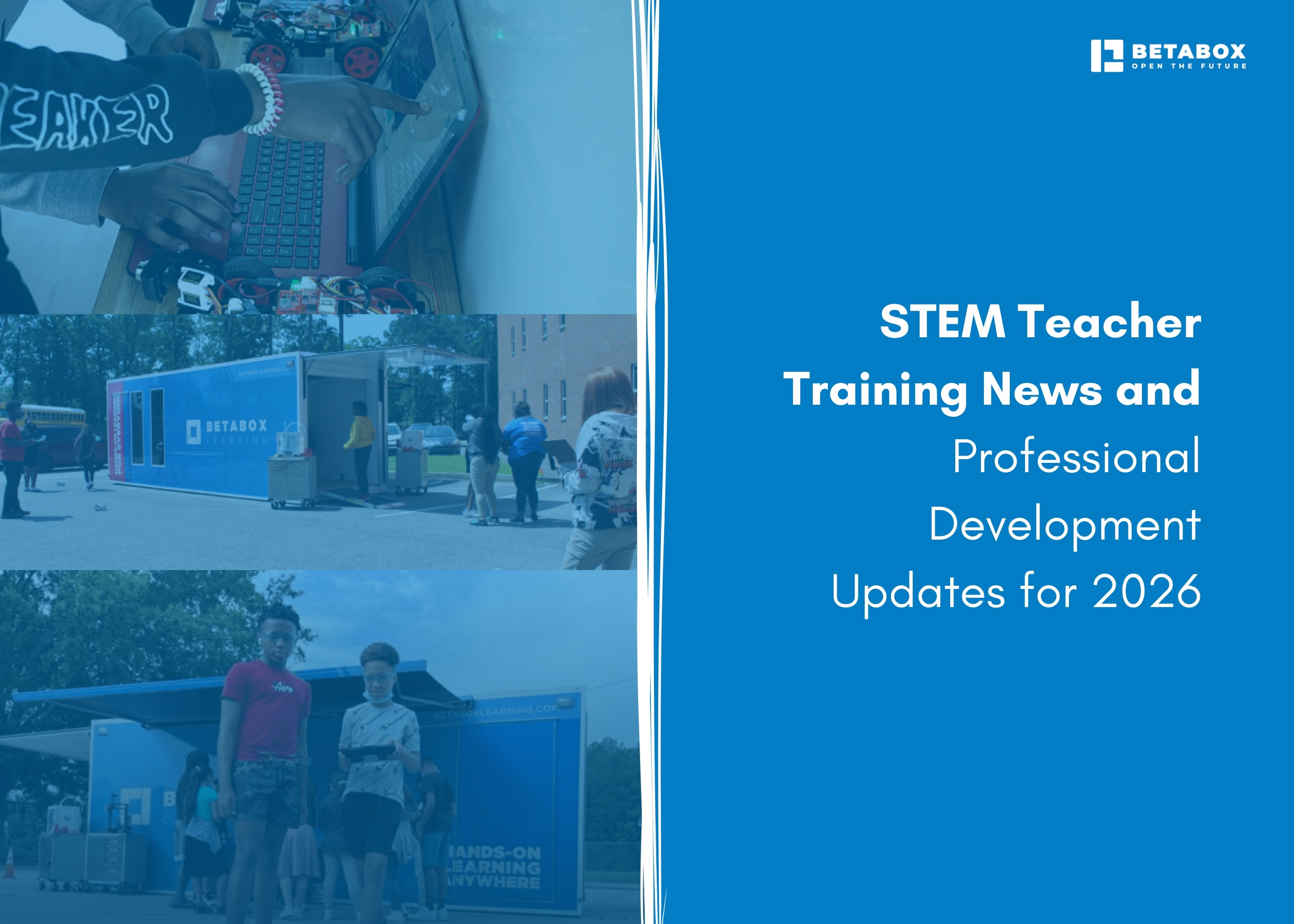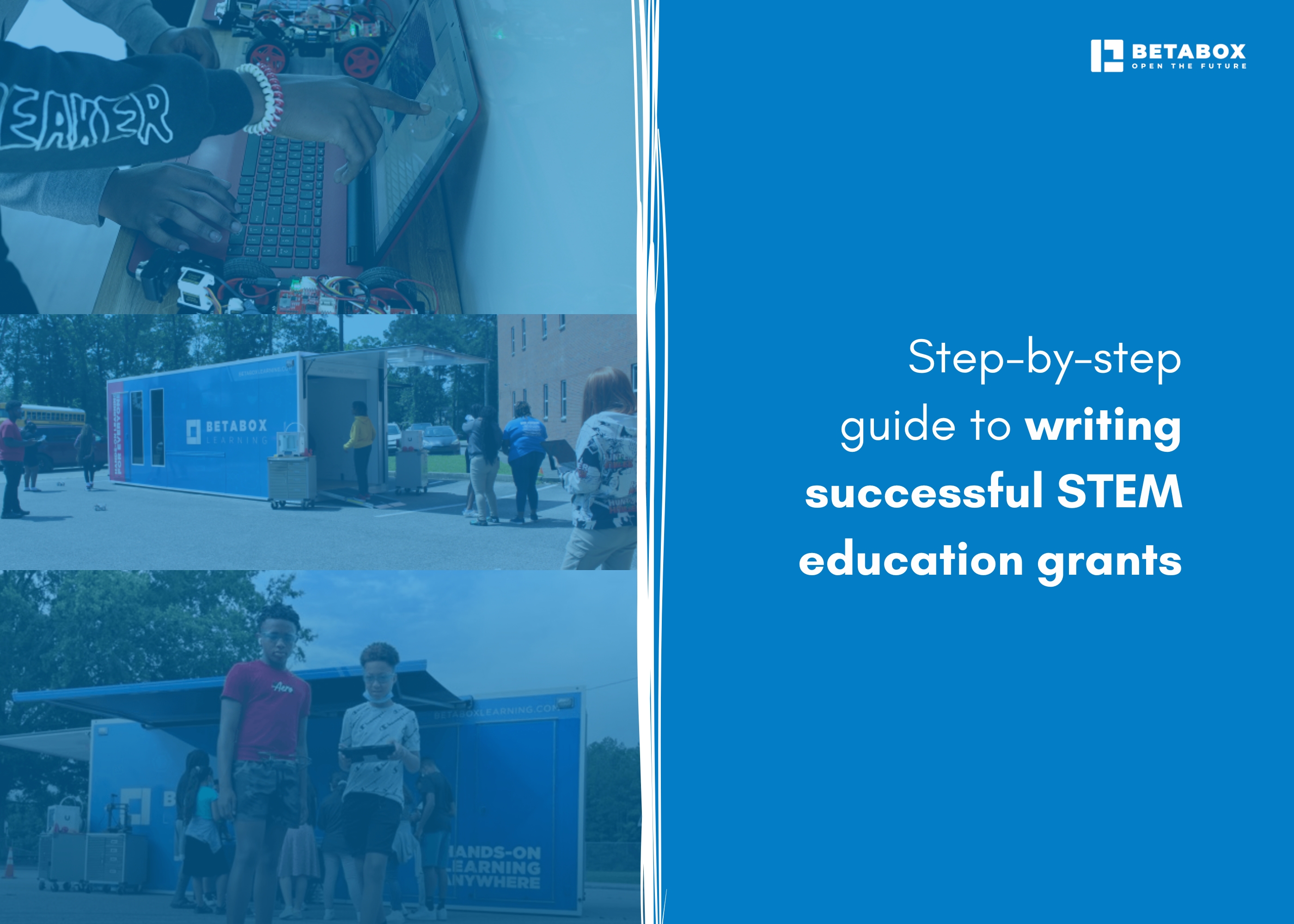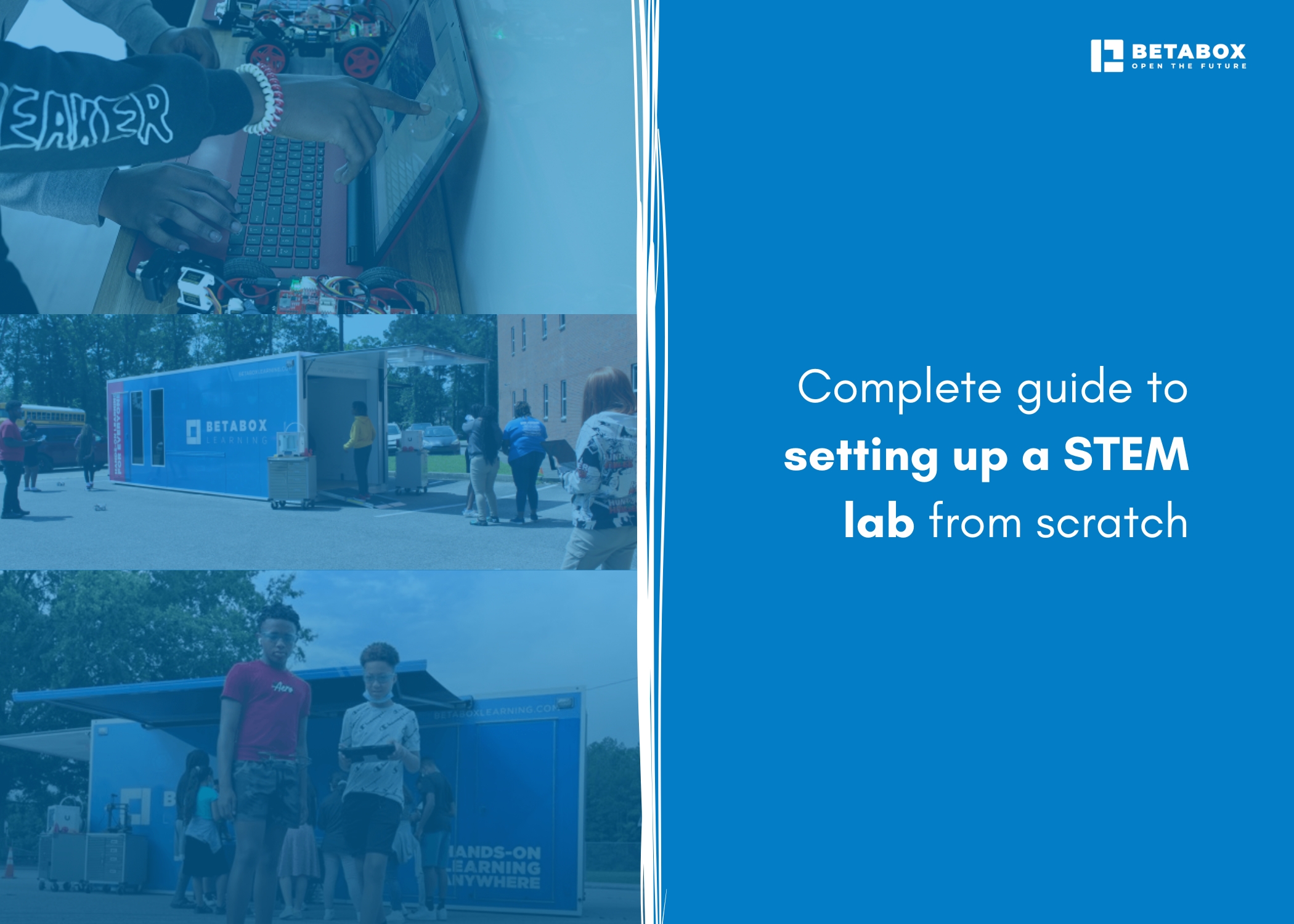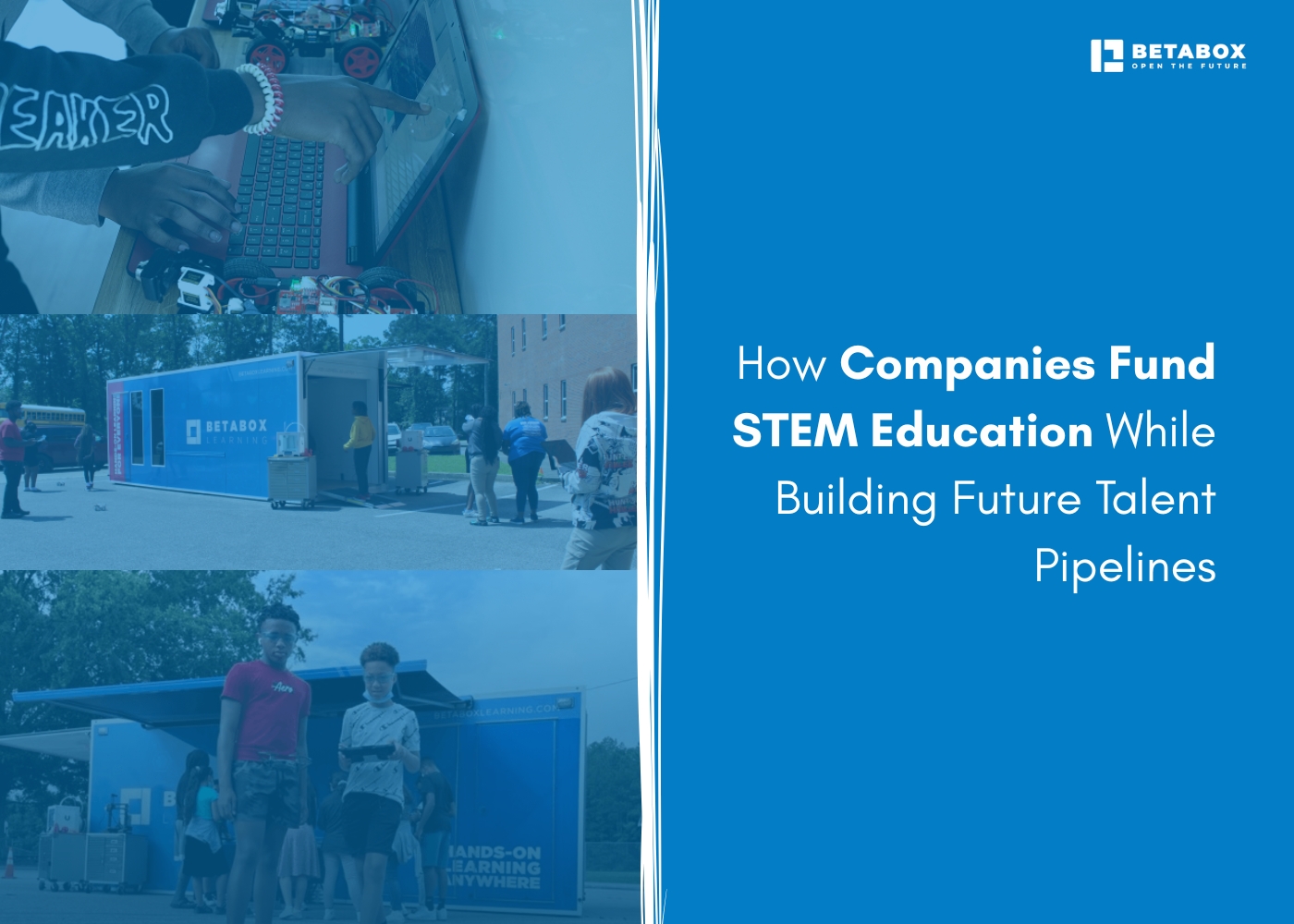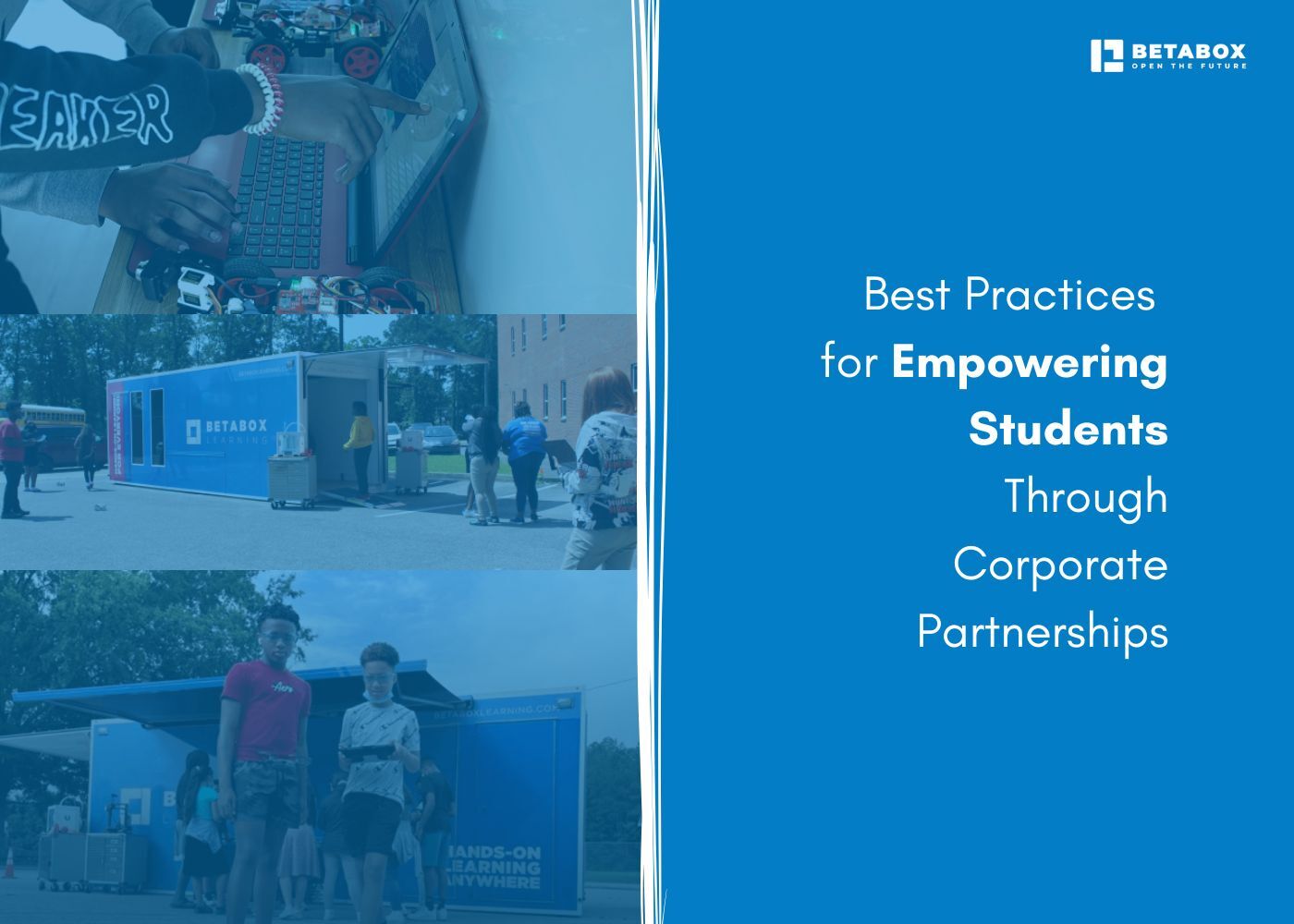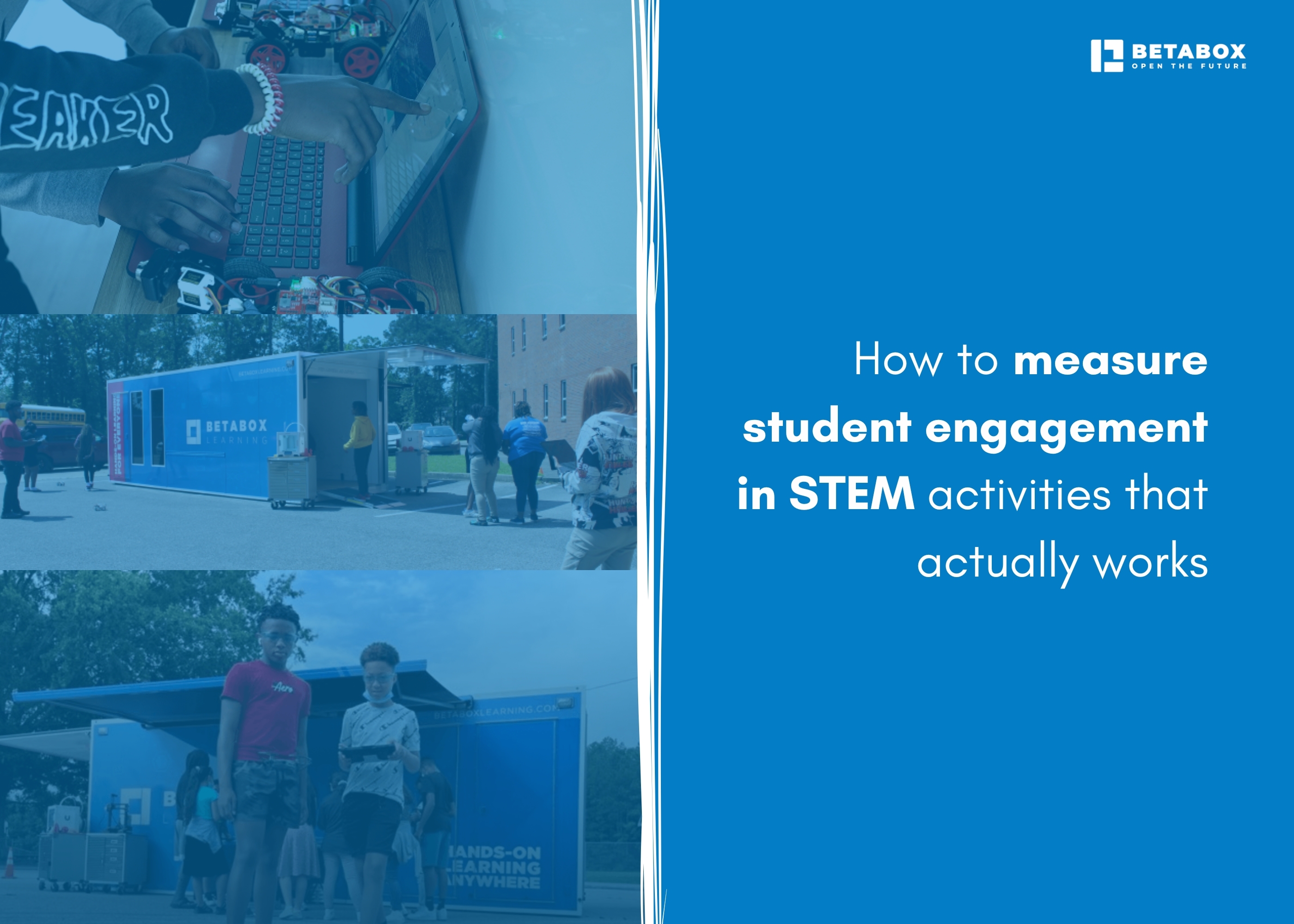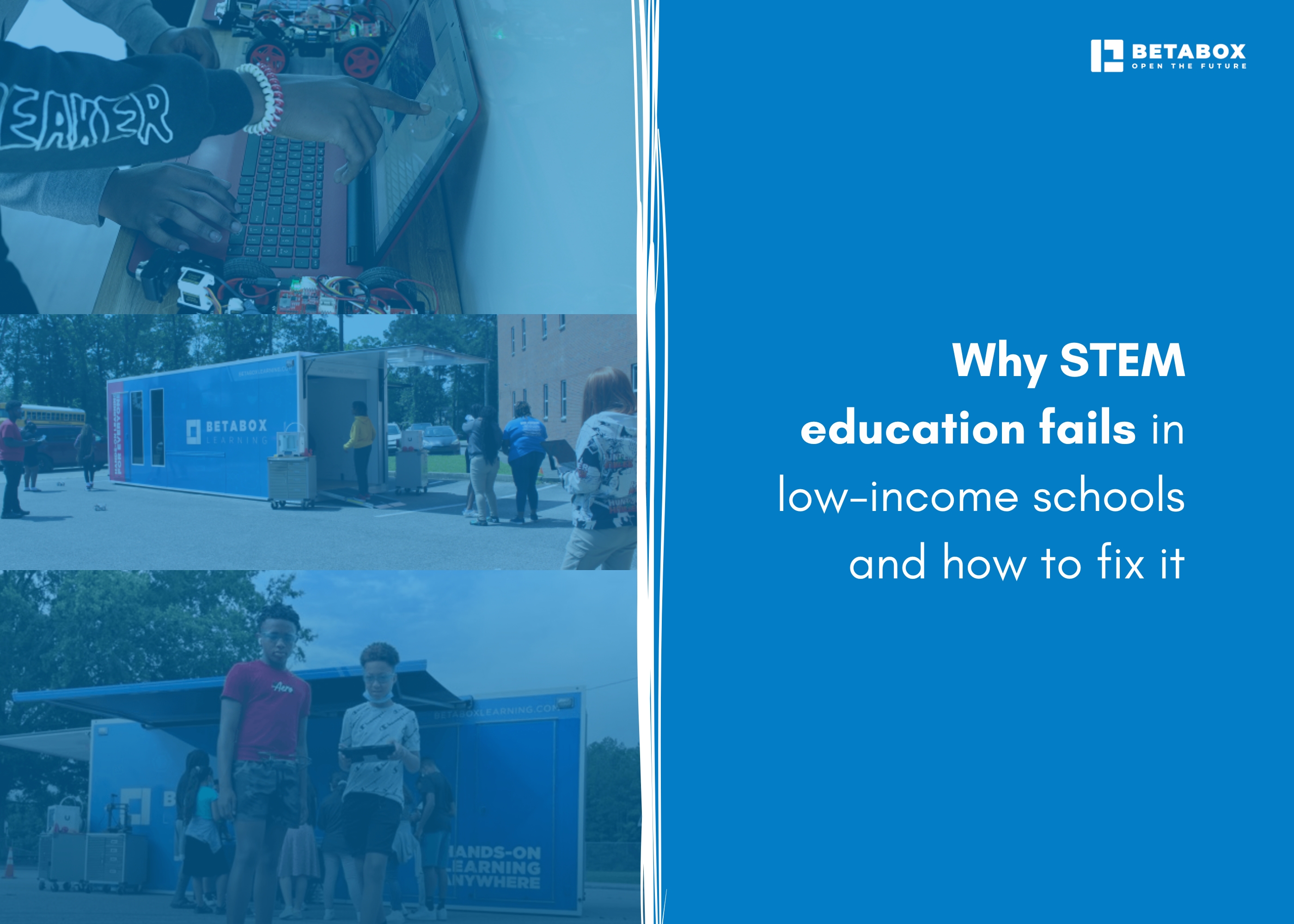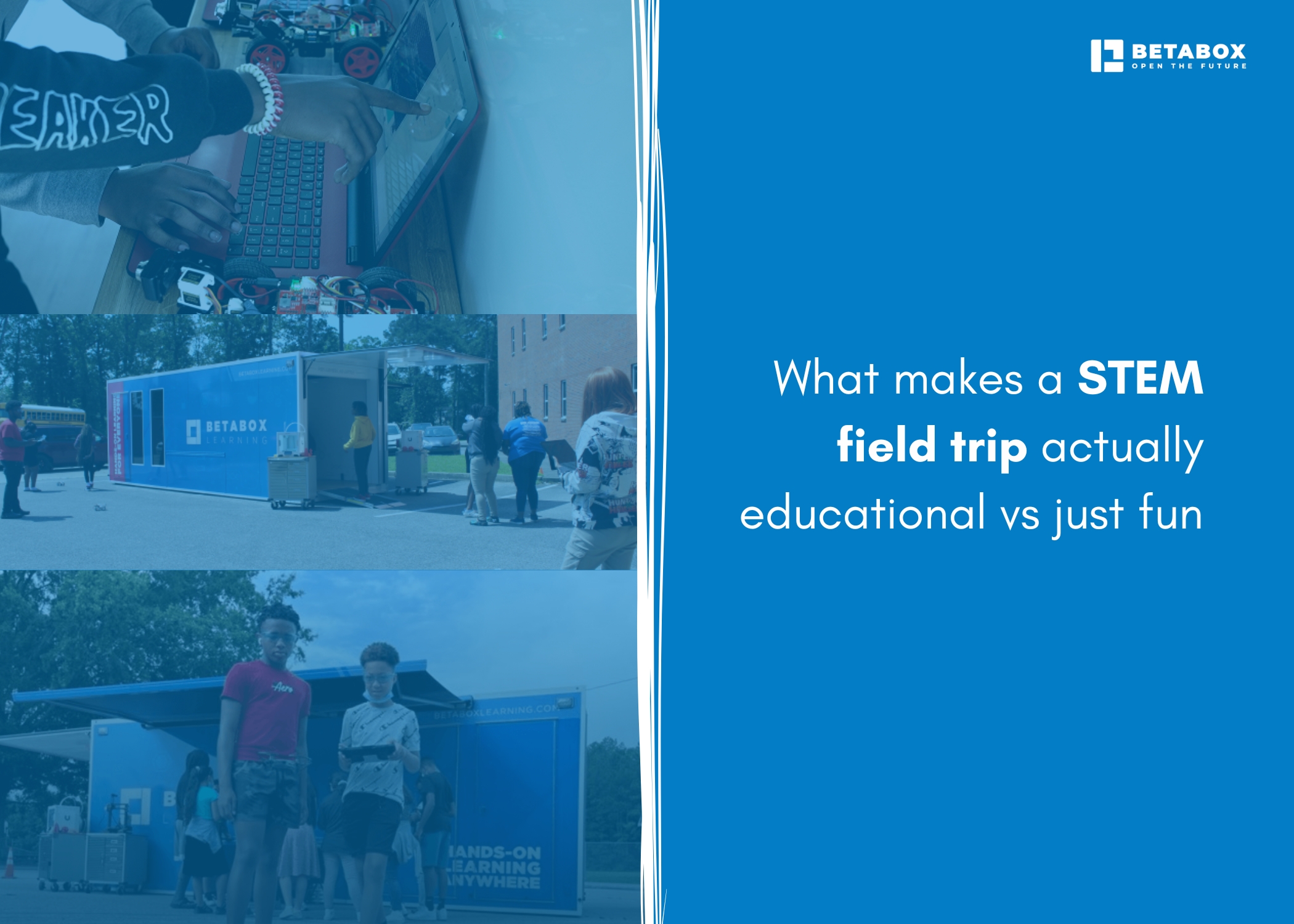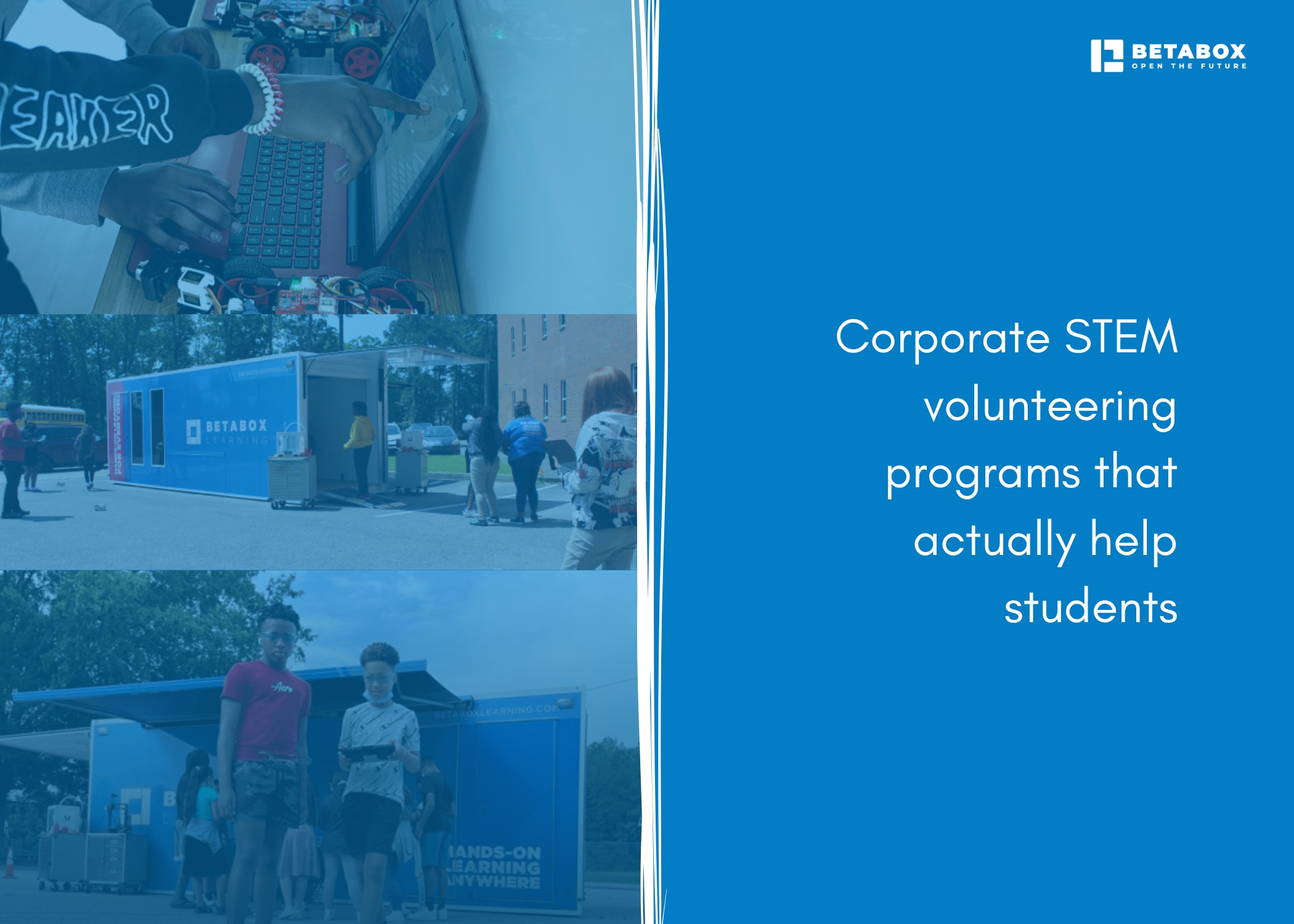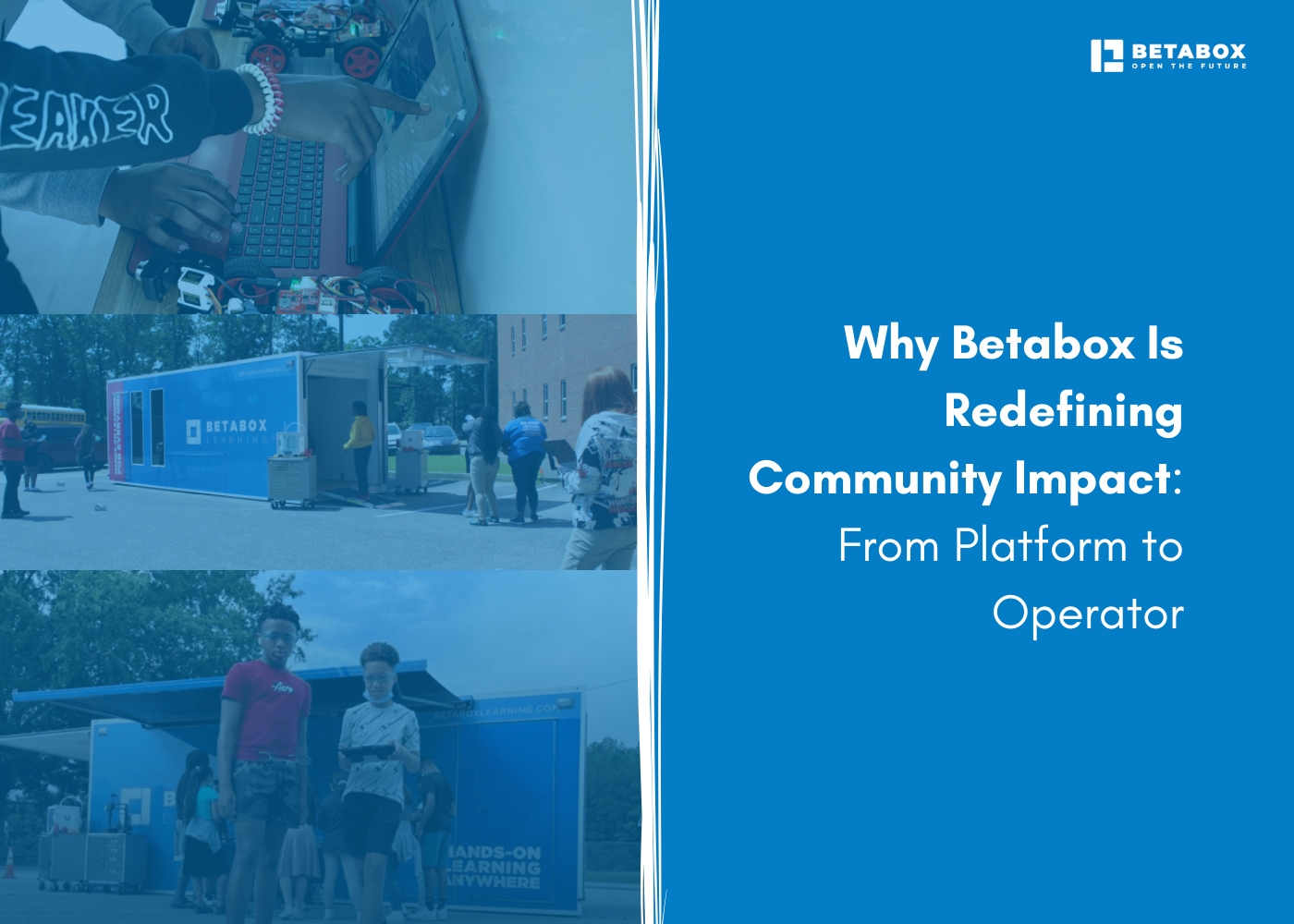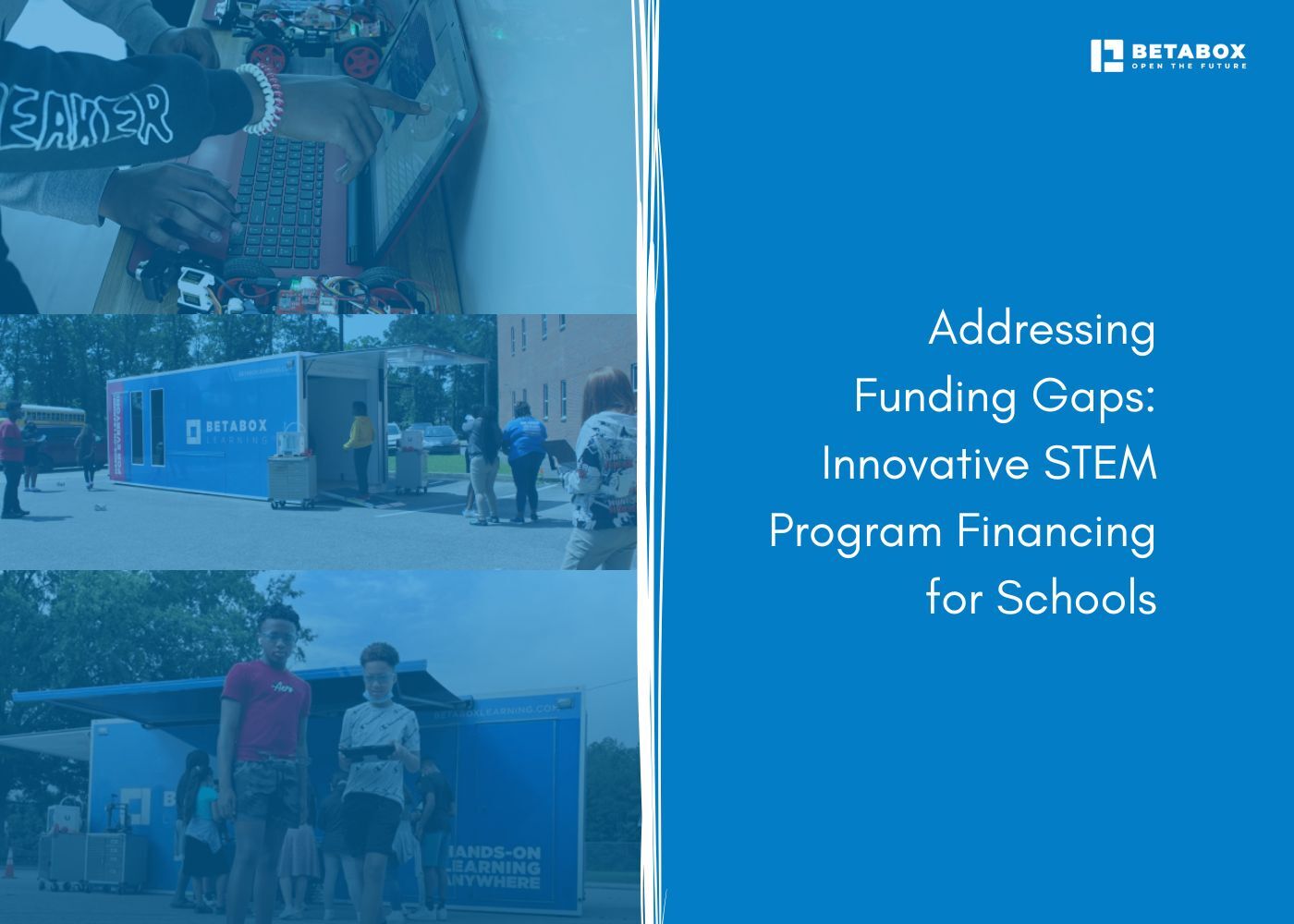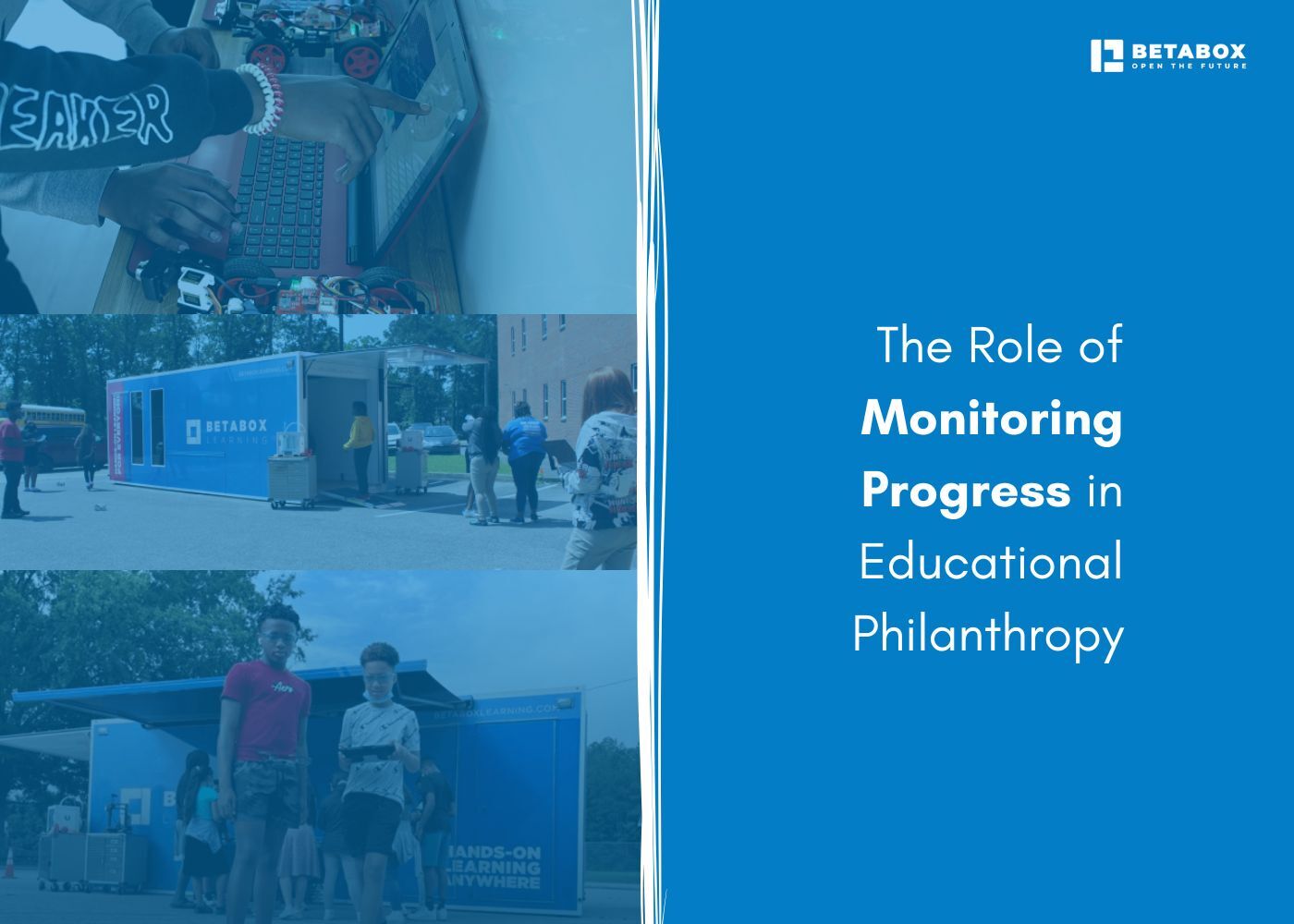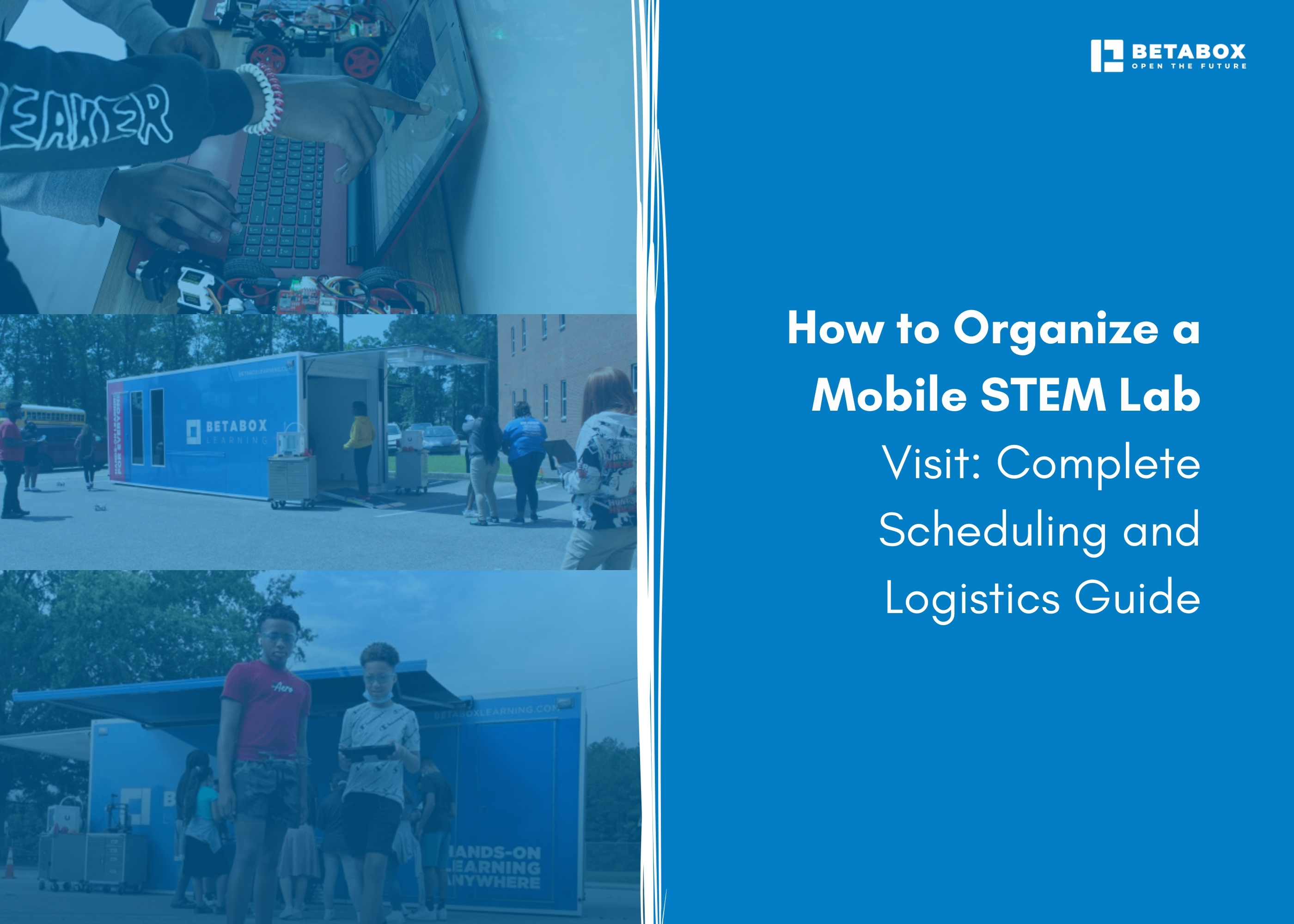
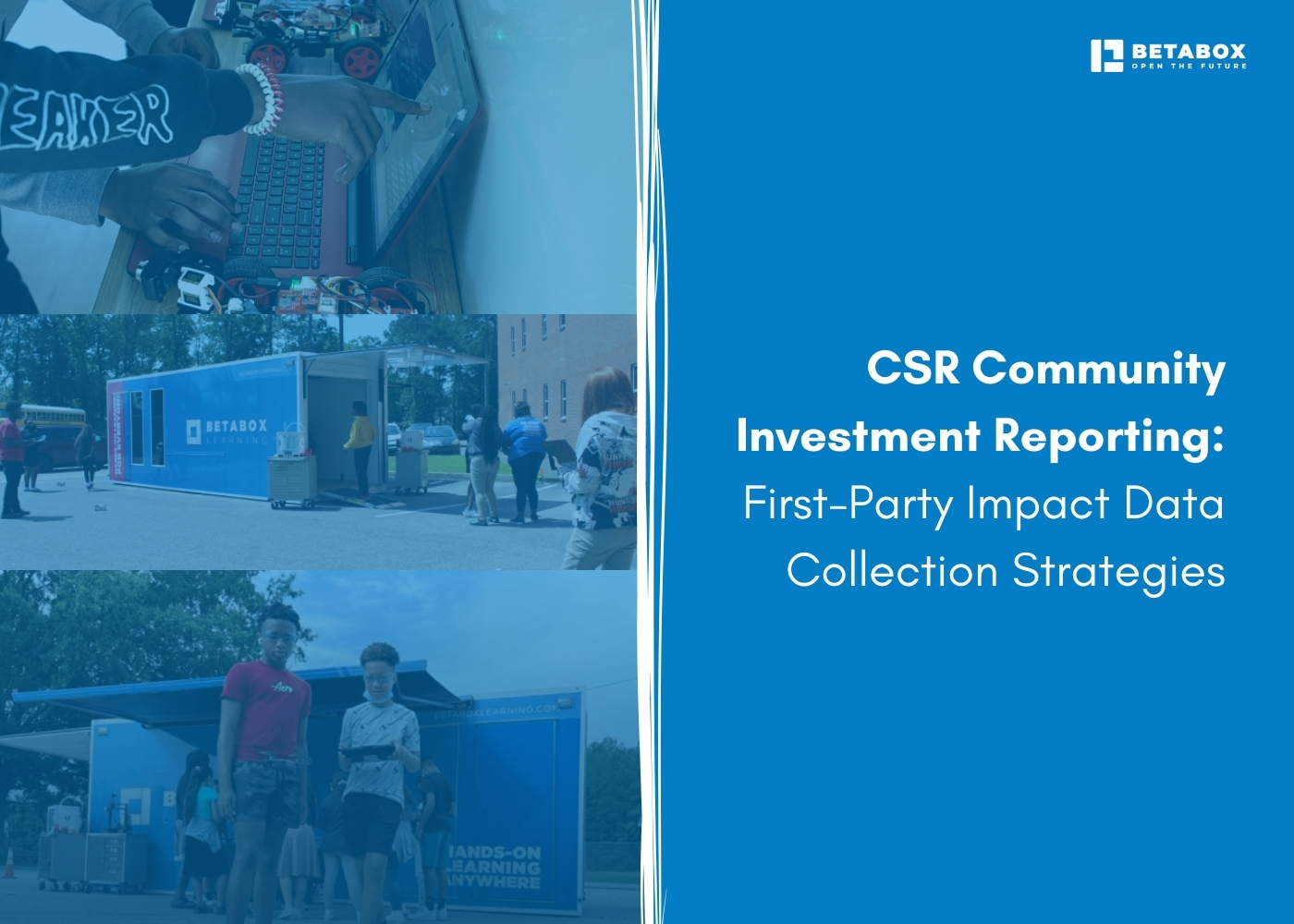
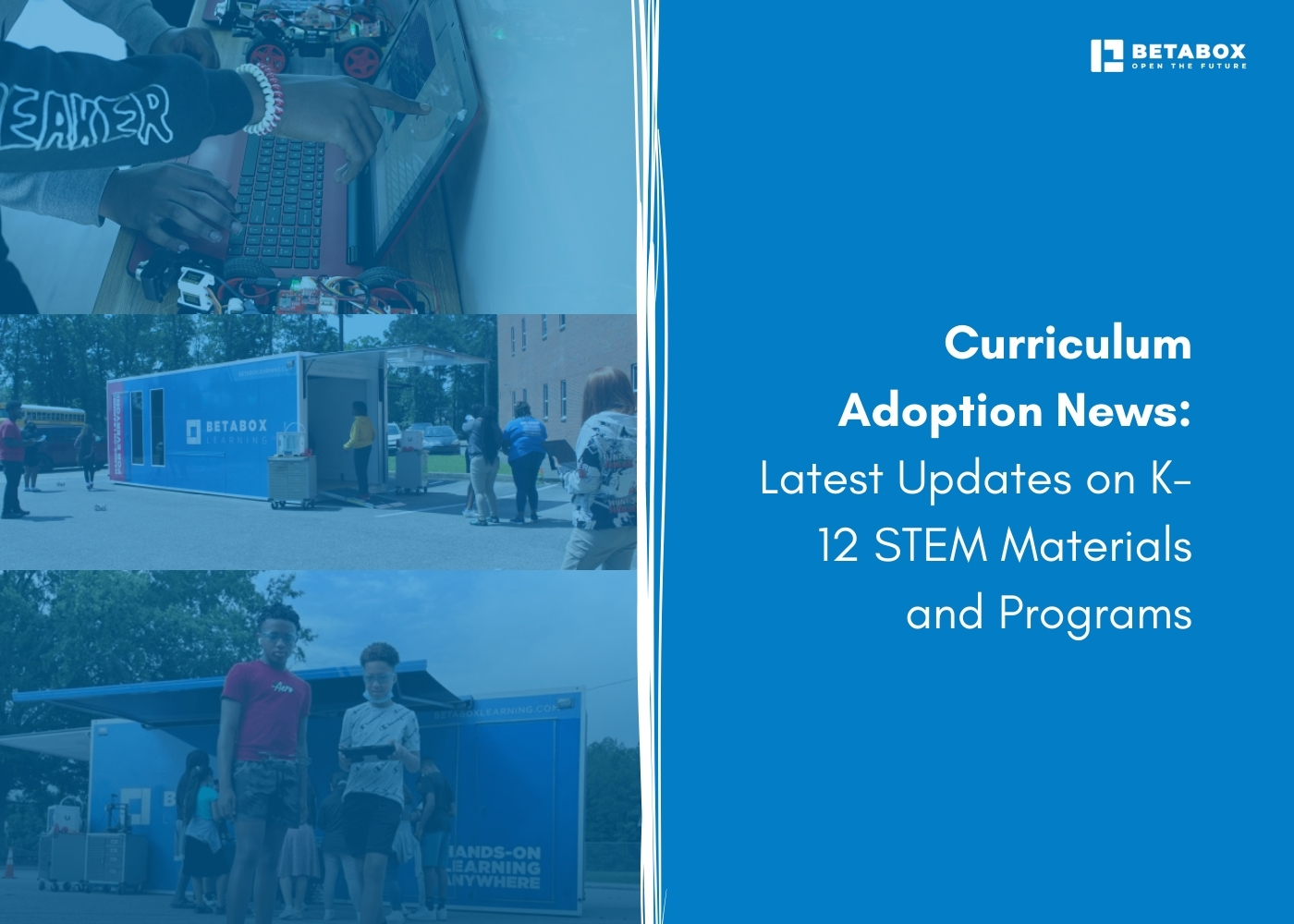
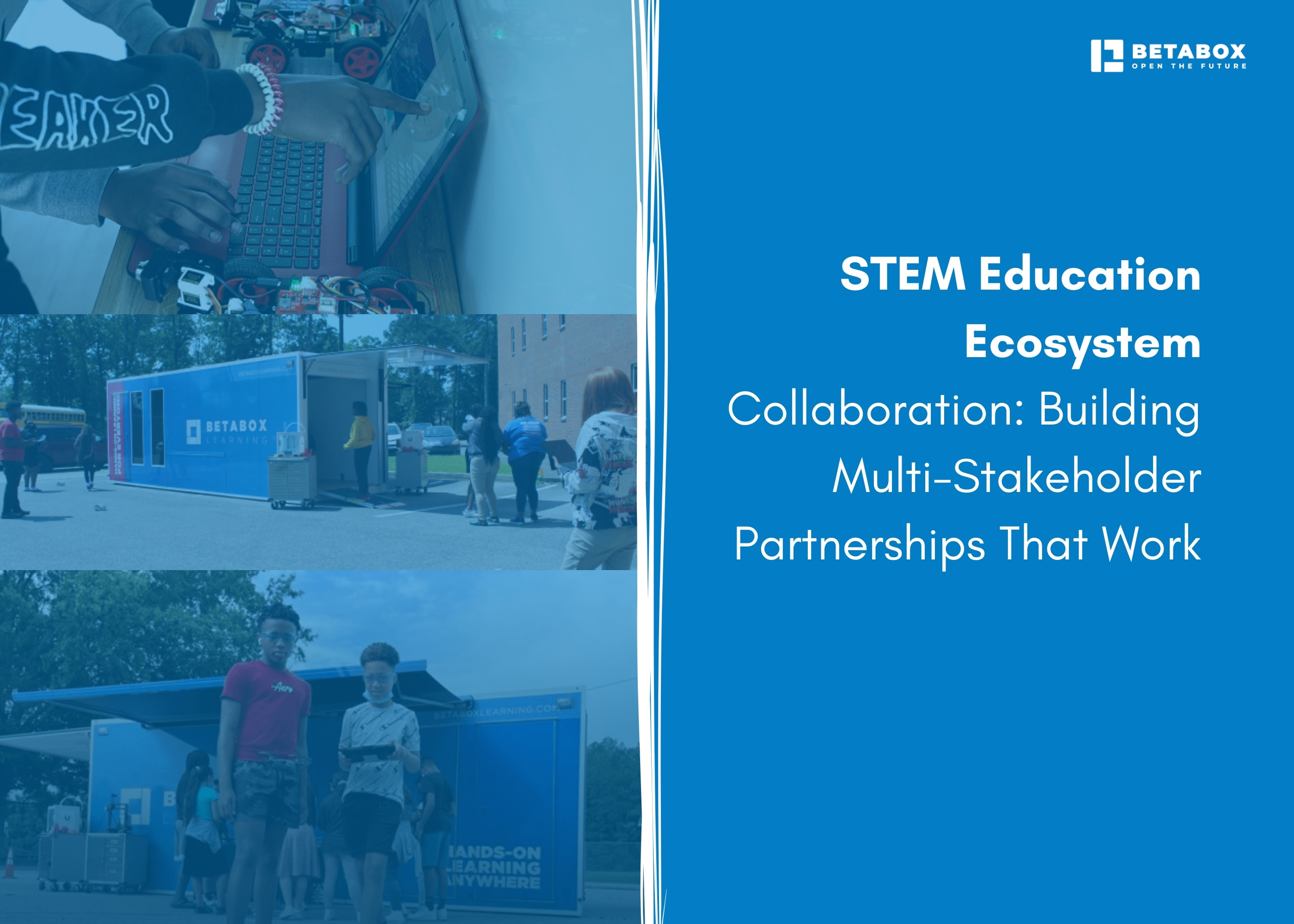
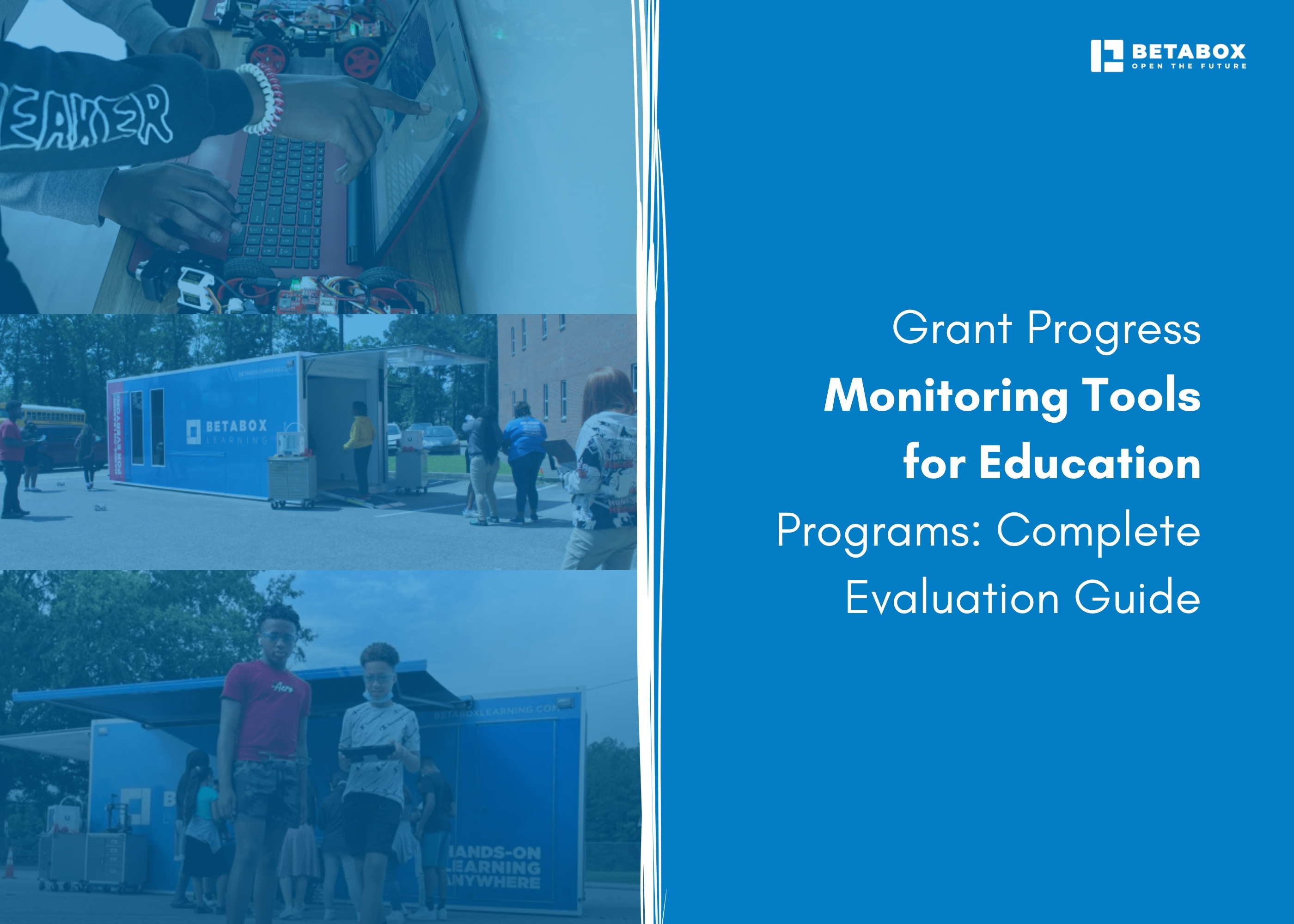
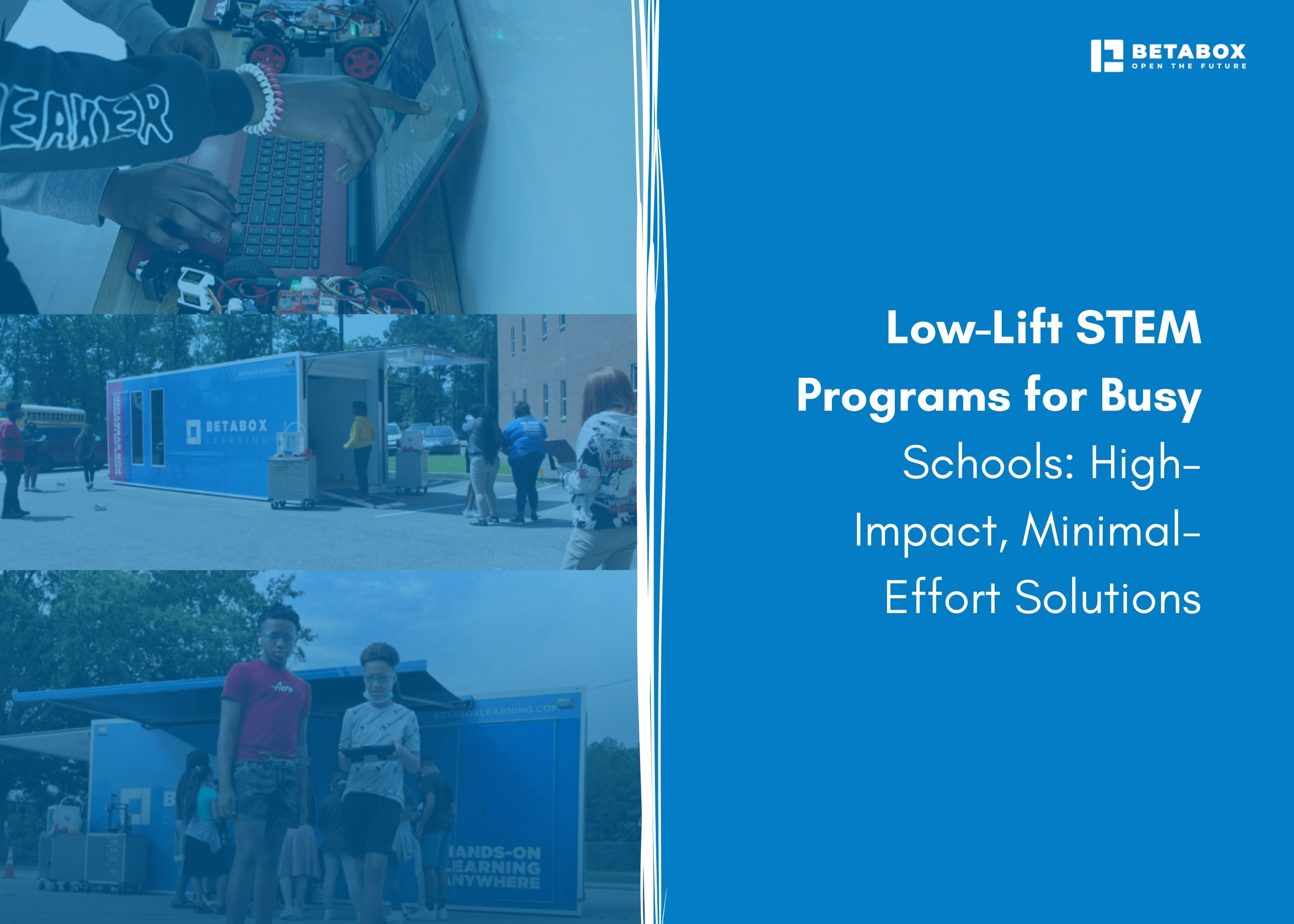
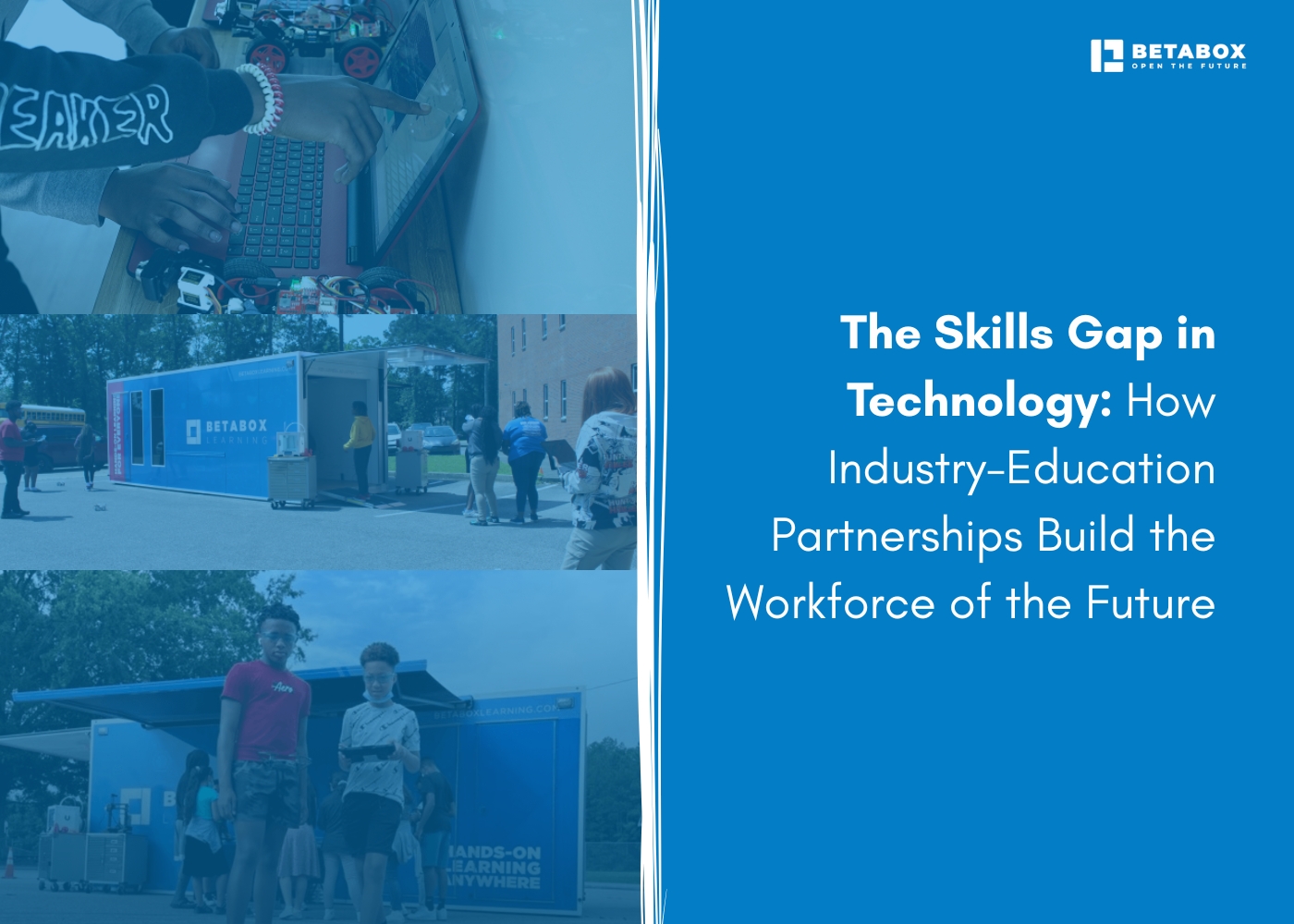
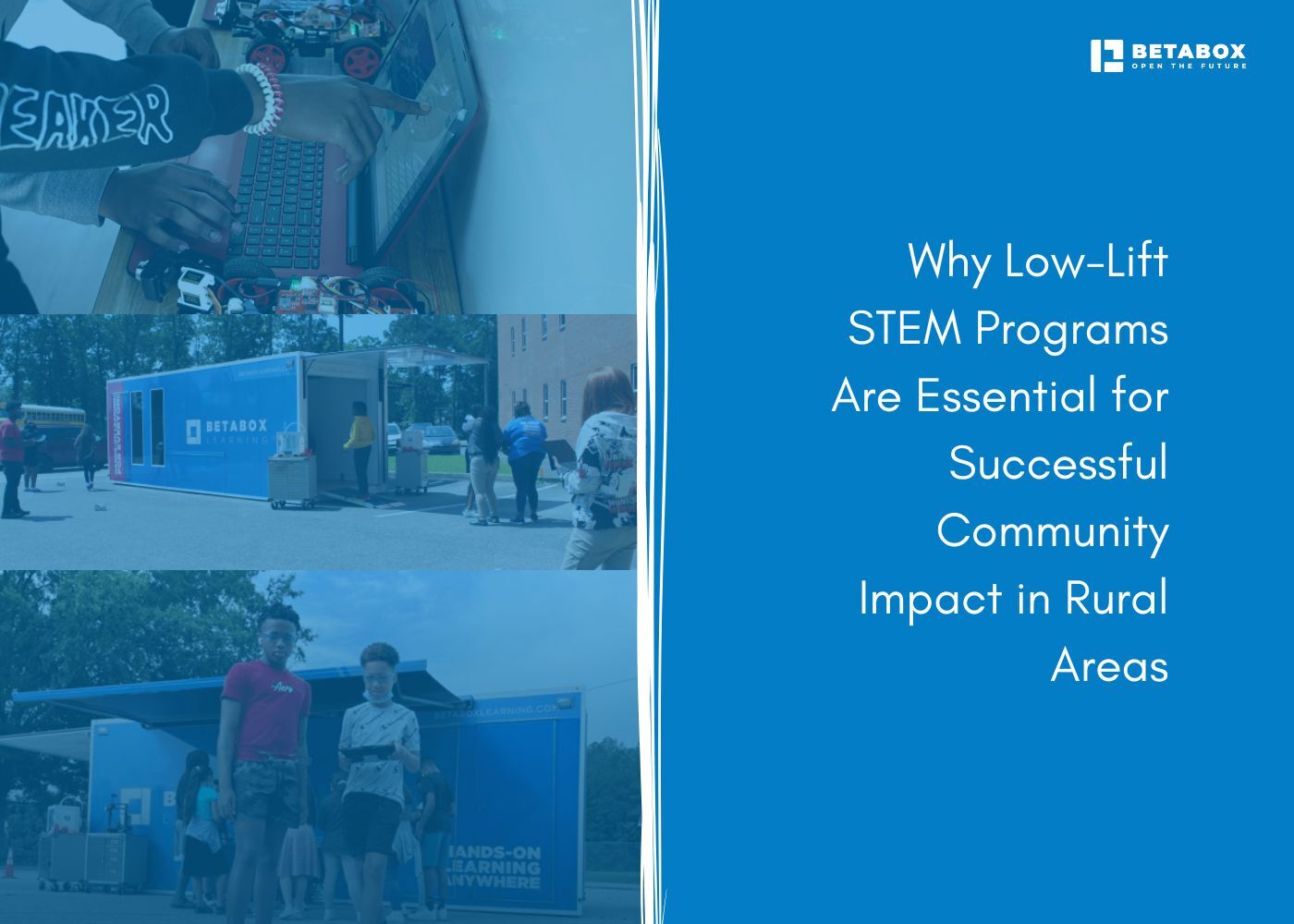
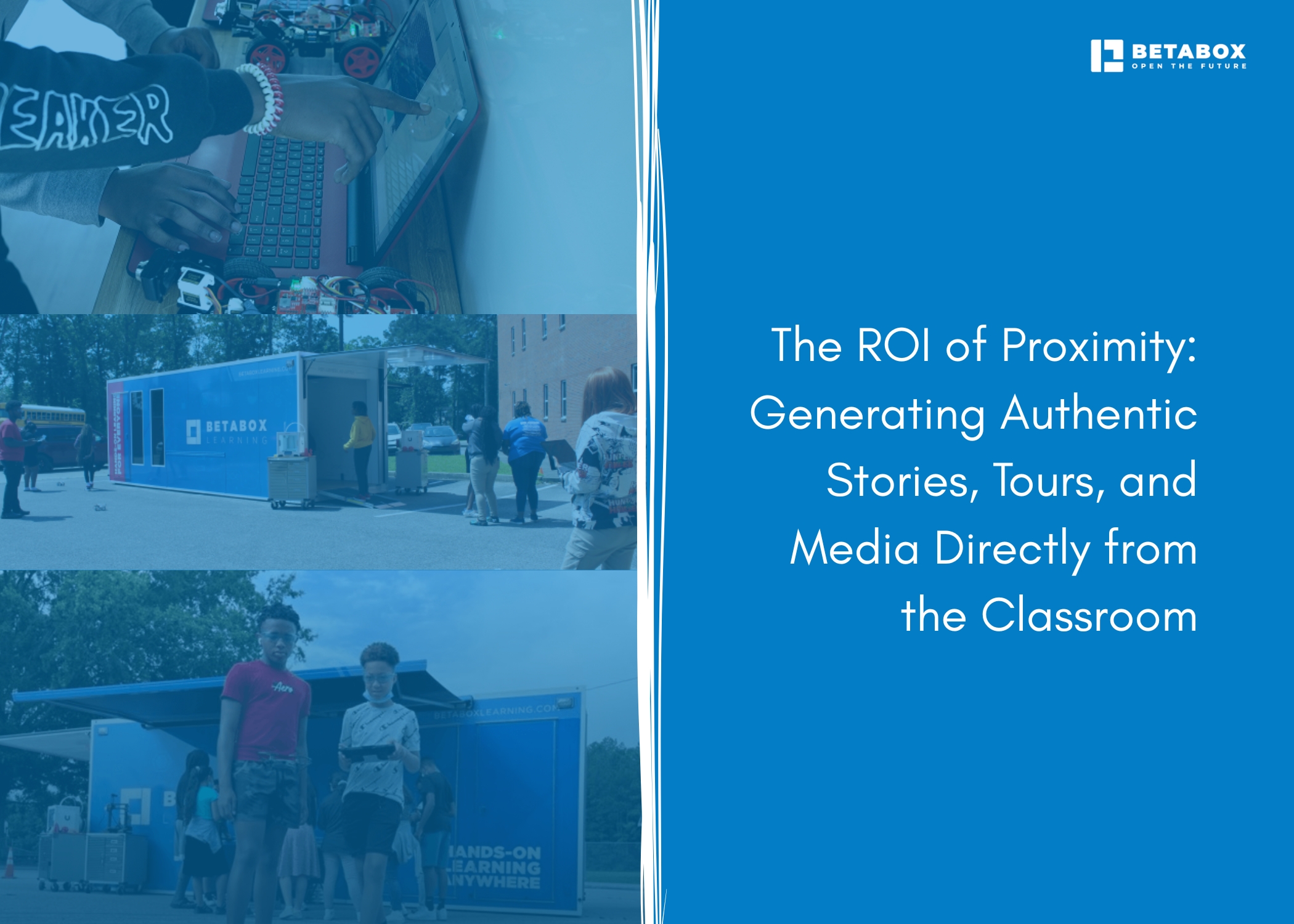
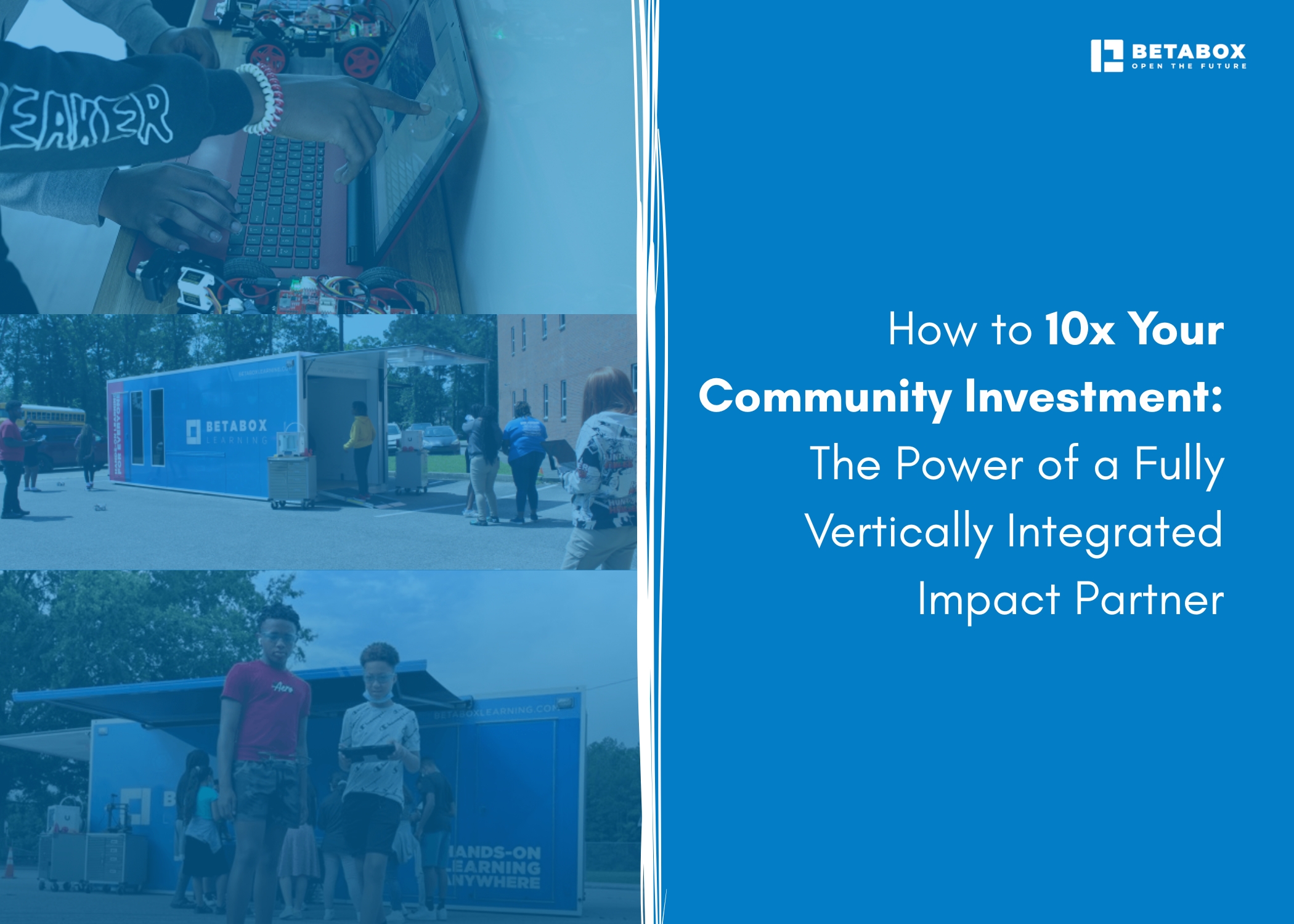
A 40-foot trailer pulls into your parking lot. Inside: 3D printers, drones, robotics equipment, and professional facilitators ready to give your students an experience they'll talk about for years.
Mobile STEM labs eliminate every excuse that keeps hands-on learning out of schools, from transportation costs to equipment budgets to teacher expertise.
The only catch? You need to know how to organize one. Here's everything you need to make it happen.
Mobile STEM labs are self-contained learning environments built into expandable trailers. Typical labs accommodate up to 24 students per session, with over 100 students served daily during week-long visits.
Zero transportation costs mean no permission slips, no buses, no field trip headaches. Hands-on equipment arrives at your location. Professional facilitators support teachers. Self-sufficient utilities mean no infrastructure requirements. Mobile STEM labs bring career discovery experiences directly to underserved communities, eliminating costly field trips while delivering measurable STEM engagement.
Students don't just observe demonstrations. They build, code, and problem-solve with real technology systems. The experience creates the kind of "spark moments" that shape career decisions.
Organizing a visit starts months before the lab arrives at your campus. Most mobile STEM programs follow a structured application and scheduling process.
Identify mobile STEM lab providers serving your region first. Betabox Onsite Field Trips offer turnkey mobile STEM experiences with funding support included, making the process straightforward for schools. Check eligibility requirements, service areas, and program focus areas aligning with your curriculum goals.
Most programs require applications during specific windows. State-funded programs often open applications 6-8 months before the school year, with campuses selected based on application responses. Applications typically include school demographics, current STEM resources, educational goals, and proposed dates. Schools serving under-resourced communities often receive priority consideration.
Once accepted, coordinate with the provider to confirm specific dates. Avoid weeks with major testing, select periods when staffing is adequate, and plan for consecutive days to serve multiple grade levels. Programs should plan for 3-5 consecutive days with up to 10 hours of programming to maximize impact.
Providers schedule consultations before arrival. Initial meetings (2-3 months before) cover your vision, curriculum alignment, and site-specific considerations. Pre-visit planning (3 weeks before) finalizes activity schedules, materials, and professional development options.
Confirm parking area accessibility, verify electrical hookup availability if needed, and designate a point of contact. Communicate visit details to teachers and staff, prepare student schedules, and review safety protocols. Most mobile labs are self-sufficient, but confirming logistics prevents last-minute complications.
Many mobile STEM labs operate at no cost to participating schools. State-funded programs serve thousands of students annually through legislative funding.
Private providers offer flexible pricing based on visit duration, number of students served, and specialized equipment. Betabox helps schools navigate funding through Impact Partners who sponsor mobile STEM experiences in communities that matter most to them.
Book a Blueprint call to explore funding options specific to your school.
Factor indirect costs like staff planning time and schedule adjustments into your budget discussions with administration. The good news: these costs are typically minimal compared to traditional field trip logistics.
Early booking ensures availability and adequate preparation time. Popular providers book schedules 6-12 months ahead for optimal spring and fall timing.
State programs typically require 4-6 months advance notice. Regional nonprofits need 3-4 months. Private providers prefer 2-3 months minimum. Schools in under-resourced communities often receive scheduling priority, supporting equitable STEM access goals.
Join provider email lists for alerts about unexpected openings from cancellations. A last-minute opportunity can still deliver tremendous value.
Start planning 4-6 weeks before the scheduled visit. Administrative tasks include finalizing student schedules, communicating visit details to families, arranging parking access, and designating a building liaison.
Teachers should review pre-visit materials 2-3 weeks before arrival. Providers supply curriculum alignment documents and extension activities to integrate preparatory lessons into existing curriculum.
Students benefit from learning about career connections and reviewing safety protocols. Research shows hands-on STEM experiences can deliver significant boosts in student STEM interest when properly integrated with classroom instruction.
Visit duration varies by program model and school needs.
Single-day visits serve 3-5 classes with 45-60 minute sessions, reaching 100-150 students total. Week-long residencies provide deeper engagement with 3-5 consecutive days on campus, serving 500-700 students through multiple daily sessions.
Individual student sessions typically run 60-90 minutes, including hands-on activity time and reflection on career connections. Providers bring professional facilitators who manage timing, materials, and instruction, allowing classroom teachers to observe and support individual students.
Labs require level parking space for 40-53 foot trailers with clearance for expandable sides adding 8-12 feet width.
Most school parking lots easily accommodate mobile labs, and providers conduct virtual site reviews during planning consultations. Labs feature self-sufficient electrical systems with onboard generators and climate control. No water or sewer connections are required.
Quality mobile labs include wheelchair-accessible ramps, interior space for mobility devices, and adjustable work surfaces. Schools should communicate accessibility needs during planning consultations.
Betabox helps educators secure resources and implement hands-on learning preparing students for technology careers.
Contact the team to start planning your mobile STEM lab visit.
How do you organize a mobile STEM lab visit for your school?
Research mobile STEM programs serving your region and submit applications 4-6 months before your desired visit date. Complete planning consultations to finalize logistics and curriculum alignment. Prepare your campus by confirming parking access and coordinating schedules.
What is the typical pricing structure for mobile STEM labs?
State-funded and nonprofit programs often operate at no direct cost to schools. Private providers charge based on visit duration, student numbers, and services included. Betabox offers funding support through Impact Partners.
How far in advance should schools book mobile STEM lab visits?
Book 4-6 months in advance for best availability. State programs open applications 6-8 months before the school year, while private providers may accommodate 2-3 months notice.
What preparation is needed before a mobile STEM lab arrives?
Finalize student schedules, arrange parking access, and designate a building liaison. Teachers should review pre-visit materials 2-3 weeks in advance. Students benefit from learning about career connections and safety protocols.
How long does a mobile STEM lab visit typically last?
Visits range from single-day experiences serving 100-150 students to week-long residencies serving 500-700 students. Individual sessions run 60-90 minutes including hands-on activity time.
What are the space and power requirements for mobile labs?
Labs require level parking space for 40-53 foot trailers with clearance for expandable sides. Labs feature self-sufficient electrical systems and climate control requiring no external connections.


Ready to learn how Betabox resources can be implemented at your school or District?
Book a Blueprint Call

.jpg)

.jpg)
.jpg)
.jpg)






.jpg)

At Betabox Learning, we are passionate about making hands-on STEM curricula accessible to all students.






.jpg)